

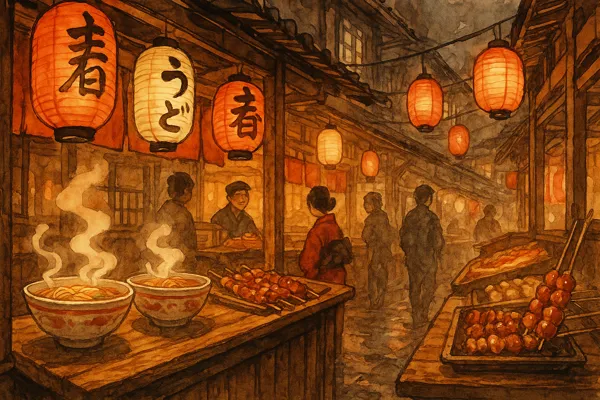
Japan's street food culture — known as yatai (屋台) food when sold from portable stalls — is one of the most joyful ways to experience the country's culinary identity. Whether you're wandering through a summer festival, exploring a covered market arcade (shōtengai), or strolling near a shrine during a holiday, the scents of grilling, frying, and steaming will guide you to something wonderful. Here's your essential guide to the dishes you shouldn't miss.
The Festival Favourites
Takoyaki (たこ焼き)
Originating from Osaka, takoyaki are round, golf ball-sized dumplings made from a wheat-flour batter cooked in a special molded pan. Each ball contains a piece of octopus (tako), pickled ginger, and green onion. They're finished with takoyaki sauce (similar to Worcestershire), Japanese mayonnaise, dried bonito flakes (katsuobushi), and dried seaweed powder (aonori). The bonito flakes dance and wave in the heat, making the presentation as memorable as the taste.
Be careful — they stay scorching hot inside even when the outside has cooled.
Yakitori (焼き鳥)
These skewered chicken pieces grilled over charcoal are a cornerstone of Japanese casual eating. Different cuts are used — thigh, breast, skin, cartilage, and even liver — each bringing its own texture. They're seasoned either with tare (a sweet soy-based glaze) or simply salt (shio). The smell of yakitori grilling at a festival or outside a train station is one of Japan's most iconic sensory experiences.
Okonomiyaki (お好み焼き)
Often described as a "Japanese savory pancake," okonomiyaki is more like a thick cabbage-and-egg fritter with your choice of fillings — pork, shrimp, squid, or cheese. The name literally means "cook what you like." It's topped with okonomiyaki sauce, mayonnaise, and bonito flakes. Hiroshima and Osaka each have their own distinct regional styles — a point of fierce and friendly local pride.
Sweet Street Treats
Taiyaki (たい焼き)
Taiyaki are fish-shaped waffles filled with sweet red bean paste (anko). The fish shape is based on sea bream (tai), considered a lucky fish in Japanese culture. Modern variations include custard, chocolate, and sweet potato fillings. They're served fresh and warm, making them a beloved snack in all seasons.
Kakigori (かき氷)
Japan's answer to shaved ice, kakigori is made from finely shaved blocks of ice and topped with flavored syrups — strawberry, melon, lemon, or the striking blue ramune flavor. High-end kakigori at specialty shops now uses natural fruit purées and condensed milk, elevating it into a true dessert experience.
Ningyo-yaki (人形焼き)
Small, molded cakes with designs representing traditional dolls, animals, or local landmarks, stuffed with sweet bean paste and baked until golden. They're popular souvenirs and snacks in older neighborhoods like Asakusa in Tokyo.
Savory Snacks and More
| Dish | Main Ingredients | Best Region to Try |
|---|---|---|
| Yakisoba | Stir-fried noodles, pork, cabbage, sauce | Nationwide festivals |
| Karaage | Fried marinated chicken pieces | Oita Prefecture (birthplace) |
| Choco Banana | Banana dipped in chocolate, sprinkles | Summer festivals everywhere |
| Corn dogs (Amerikan dog) | Sausage in sweet cornbread batter | Convenience stores, festivals |
| Mitarashi Dango | Rice flour dumplings with sweet soy glaze | Kyoto, shrines |
Tips for Eating Street Food in Japan
- Eat while standing or walking near the stall. Unlike some countries, eating while walking in public is considered impolite in Japan. Stay near the vendor's stall to eat, or find a designated eating area.
- Bring cash. Many street food stalls and small vendors are cash-only. Always keep yen on you.
- Look for the queue. A line of locals is the best indicator of quality. Don't be shy about waiting — it's almost always worth it.
- Try the regional specialties. Japan's street food varies significantly by city and region. Osaka is the street food capital, but Fukuoka, Kyoto, and Tokyo each have their own signature items.
When and Where to Find Street Food
Street food thrives during Japan's many seasonal festivals (matsuri). Summer festivals between July and August are particularly rich in street food variety. Outside of festivals, covered market streets (shōtengai) like Nishiki Market in Kyoto or Ameyoko in Tokyo offer excellent year-round street eating. Amusement parks, shrine grounds, and popular tourist neighborhoods also reliably have quality vendors.
Japan's street food scene is generous, approachable, and endlessly varied. Even if you visit the same festival twice, the lineup of stalls will likely be different. That sense of discovery is half the pleasure.