

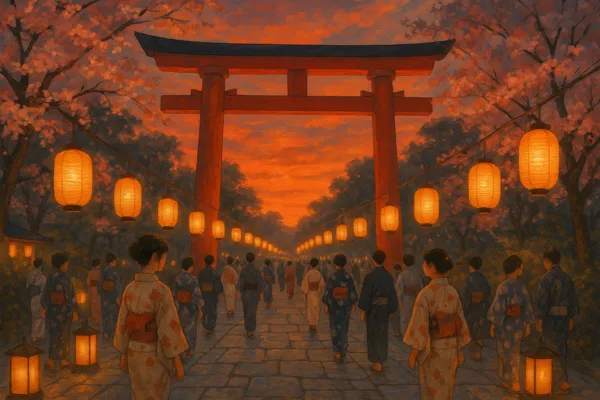
Few cultural experiences are as immersive and visually spectacular as a Japanese festival. Called matsuri (祭り), these celebrations are rooted in Shinto and Buddhist traditions, originally designed to honor deities, mark the agricultural calendar, and bring communities together. Today, they remain deeply meaningful while also being some of the most exciting public events in the world. Whether you're planning a visit to Japan or simply exploring from home, understanding matsuri culture opens a door to the Japanese soul.
What Is a Matsuri?
The word matsuri derives from the verb matsuru, meaning "to worship" or "to enshrine." At their core, most matsuri are religious observances tied to local Shinto shrines or Buddhist temples. However, they have evolved into community celebrations full of music, food, processions, and performance — bringing people of all ages into the streets together.
Japan has thousands of matsuri throughout the year, ranging from intimate neighborhood events to massive spectacles drawing millions of visitors. Each region has its own signature festivals reflecting local history and geography.
The Most Famous Festivals in Japan
Gion Matsuri (Kyoto) — July
One of Japan's three greatest festivals, Gion Matsuri runs throughout the entire month of July and culminates in two enormous processions of elaborate floats (yamaboko). These towering, ornately decorated constructions are pulled through central Kyoto by teams of men in traditional dress. The festival has roots going back over a thousand years as a purification ritual to appease the gods during an epidemic. The evening street markets leading up to the main procession are magical.
Awa Odori (Tokushima, Shikoku) — Mid-August
The Awa Odori is Japan's largest dance festival, held in Tokushima every year during the Obon season. Groups of dancers and musicians parade through the streets in a hypnotic, joyful rhythm. The traditional saying goes: "Those who dance are fools, those who watch are also fools — so why not dance?" Visitors are actively encouraged to join in, making this one of the most participatory festivals in the country.
Sapporo Snow Festival (Hokkaido) — February
Every February, Sapporo's Odori Park transforms into an outdoor gallery of enormous snow and ice sculptures. Some are several stories tall, incredibly detailed representations of world monuments, fantasy scenes, and characters. Temperatures can be well below freezing, so dressing warmly is essential — but the atmosphere is uniquely magical, and the beer garden within the festival is particularly beloved.
Tanabata (Nationwide) — July 7
Based on the legend of two star-crossed lovers — represented by the stars Vega and Altair — Tanabata involves writing wishes on colorful strips of paper (tanzaku) and hanging them on bamboo branches. The streets are decorated with enormous, colorful streamers. Sendai holds Japan's largest Tanabata celebration, a few weeks after the traditional date in August.
Ōmisoka and New Year (Shōgatsu) — December 31–January 3
The Japanese New Year is the most important holiday in the calendar. On New Year's Eve (Ōmisoka), Buddhist temples ring their bells 108 times at midnight to dispel human desires according to Buddhist teaching. On New Year's Day, families visit their local shrine or temple (hatsumōde) for the first prayer of the year. The atmosphere is serene and deeply communal.
Festival Calendar Overview
| Month | Festival | Location |
|---|---|---|
| February | Sapporo Snow Festival | Hokkaido |
| March–April | Cherry Blossom Hanami | Nationwide |
| July | Gion Matsuri | Kyoto |
| July 7 | Tanabata | Nationwide (Sendai main event) |
| August | Awa Odori | Tokushima, Shikoku |
| October | Jidai Matsuri (Festival of Ages) | Kyoto |
| December 31 | Ōmisoka / Joya no Kane | Nationwide |
What to Wear: The Yukata
One of the most charming aspects of attending a summer festival is the opportunity to wear a yukata — a lightweight, casual version of the traditional kimono. Many hotels and ryokan offer yukata rentals to guests, and dedicated kimono rental shops near major festivals allow visitors to dress up for the occasion. Wearing a yukata to a summer matsuri is widely embraced and appreciated as a show of cultural respect, not cultural appropriation.
Practical Tips for Attending
- Arrive early for procession events — crowds gather hours before the main events begin.
- Bring cash for street food stalls and game booths, as card payment is uncommon.
- Dress appropriately for the season — summer festivals can be intensely hot and humid.
- Be respectful near shrine areas — many matsuri have a sacred component and signal this clearly.
- Book accommodation months in advance for the major festivals like Gion Matsuri, which are known to fill up an entire city.
Experiencing a Japanese festival is one of the most profoundly human things you can do in Japan. The combination of ancient ritual, communal spirit, sensory spectacle, and sheer warmth creates memories that stay with visitors long after they've returned home.